01 · BRING✦Your AI assistantChatGPT, Claude, or supported AI
→
02 · CONNECTCVCVPortal's planCoaching tools + private workspace
→
03 · BUILD✓Your career caseClear, tailored, approved by you
Clear help for job seekers and hiring teams
CVPortal is BYOA—Bring Your Own Agent. You connect the AI assistant you already use, such as ChatGPT or Claude. CVPortal gives your Agent a clear plan and useful tools. Pick the side that fits you today.
Anyone opening an invited portal can review it free.
BYOA: Bring Your Own Agent
CVPortal is BYOA—Bring Your Own Agent. That means you connect the AI assistant you already use, such as ChatGPT or Claude. With your permission, CVPortal gives your Agent a career-coaching plan and private workspace. Together, you build a clear career story and a CVPortal tailored to each opportunity. You approve every word and action.
Founding target3–6 hours back each weekand same-day tailored application prep
BYOA: Bring Your Own Agent
CVPortal is BYOA—Bring Your Own Agent. That means your team connects the AI assistant you already use, such as ChatGPT or Claude. CVPortal gives your Agent a hiring plan and shared workspace. Together, you define the work, review real candidate proof, and keep interviews, messages, and offers moving. Your team makes every decision.
Founding target8–12 team hours back per roleand 3–7 fewer days of handoff delay
Your AI Agent does three big jobs
After signup, CVPortal shows you how to connect your AI assistant. Your agent then guides the conversation, organizes the work, and creates the drafts. You review the result.
Your agent asks about jobs, school, projects, problems you solved, and real wins.
Your agent explains how your experience fits a new role, career change, promotion, or AI-powered work.
Your agent builds a focused CVPortal for the role, employer, client, or next step in front of you.
Your AI Agent does three big jobs
After signup, CVPortal shows you how to connect your team's AI assistant. Your agent then helps define the role, organize candidate proof, and prepare each next step. Your team reviews the work.
Your agent turns the outcome, pay, and proof you need into a clear role and interview plan.
Your agent organizes projects, results, and job-related evidence in one clear view.
Your agent prepares messages and offers. Your team approves and sends every real hiring action.
One problem. Two starting points.
You may have little job history but strong projects and fast learning. Or you may have years of proof hidden behind old role language. CVPortal helps you find and use it.
See more than years and titles
New grads may bring strong projects and fast learning. Experienced people may hide years of proof behind old titles. CVPortal brings both into one clear view.
Turn projects, labs, coursework, and self-led work into proof that shows how you learn and build.
See how this person learns, builds, tests, and improves—not just how long they have held a title.
Translate years of judgment, systems work, and results into the new ways of working now.
See the systems thinking and judgment behind old role words—and where that value can go next.
The signal that lasts
Tools change. If you can map a workflow, ask good questions, test the output, and improve the system, you can learn what comes next.
Tools change. Look for people who can map a workflow, ask good questions, test the output, and improve the system.
Show my transferable value ↗ Hire for value that lasts ↗What your agent does
You do not need to be a résumé writer, career coach, or job-search expert. Answer simple questions and watch your next move take shape.
What your agent does
You do not need to build every role brief, interview plan, follow-up, or offer from scratch. Set the goal, review the work, and approve each next step.

Your agent asks about jobs, school, side projects, volunteer work, hard problems, and wins—and uses only the chats and files you choose.
YOUR WHOLE STORY
Your agent highlights the work that best shows your value and explains how it fits what comes next. You approve every claim.
YOUR BEST PROOF, APPROVED
Your agent turns your approved proof into a polished profile you can tailor for each opportunity. You approve it before it is shared.
YOUR APPROVED BASELINE
Tell your agent what the business needs, the pay range, and what proof matters. Your agent prepares the role brief and interview plan.
CLEAR ROLE + FAIR RULES
Your agent brings projects, results, judgment, and learning into one clear view so your team can review people fairly.
REAL PROOF, SAME PLAN
Your agent drafts interview notes, messages, and offer materials. Your team decides what moves and sends every binding action.
YOUR TEAM MAKES THE CALLAfter your CVPortal is ready
After the role is open
Tell your agent what matters: pay, benefits, location, culture, and the work you want. Your agent checks supported company career sites, explains the best matches, and tailors your CVPortal for each opportunity.
Your agent can organize invitation links and candidate proof, prepare consistent interviews and messages, and bring the next approved action to your team.
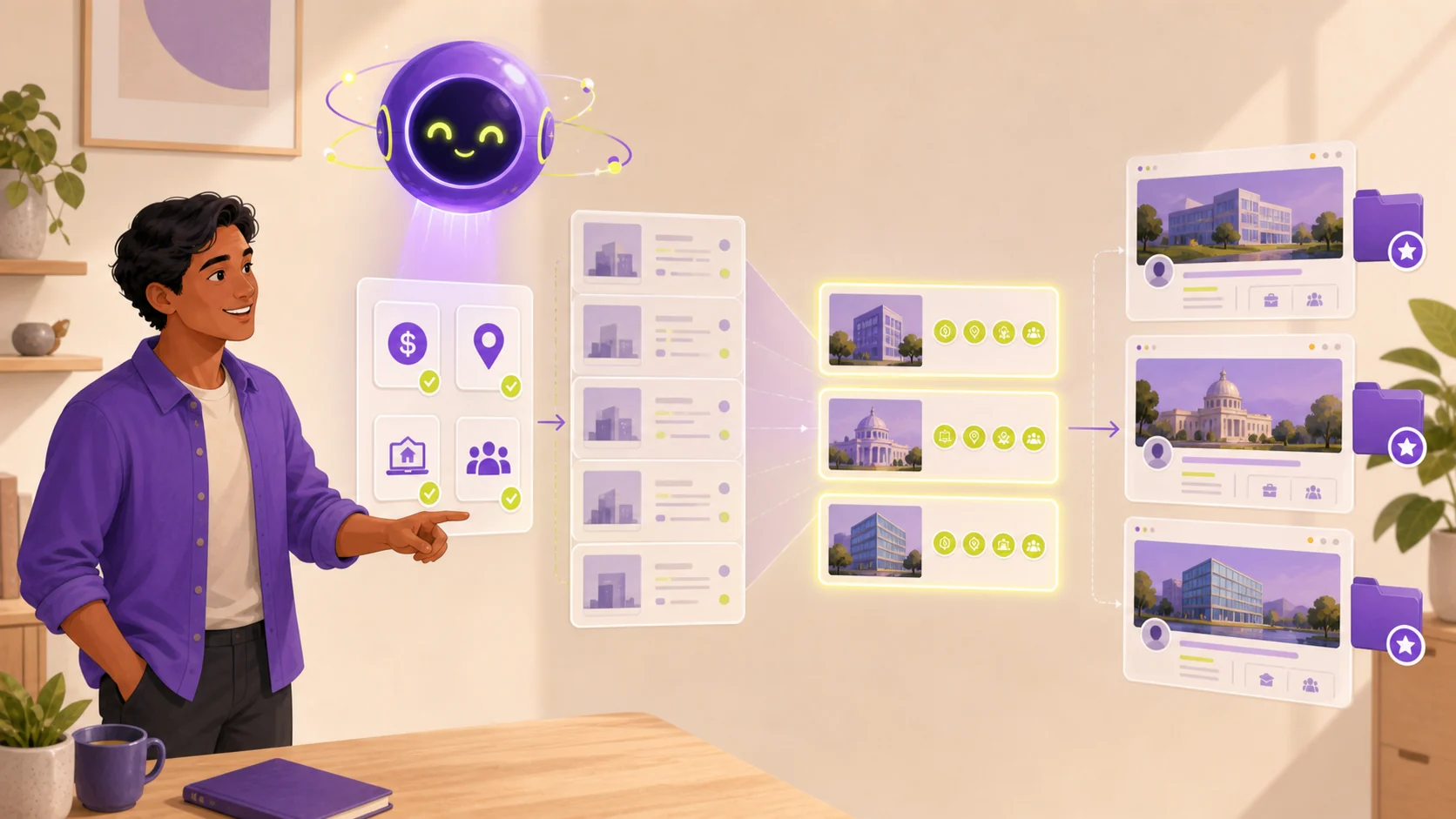
✓ You approve every application and invitation.

✓ People approve every post, message, stage move, and offer.
One paid home for the whole hiring flow
Open a role, invite or find people, review real proof, run useful interviews, share clear messages, and move an approved offer to yes.
Set the outcome, proof, interview plan, pay range, and owners before the search starts.
Use job-related questions and evidence notes. No hidden score decides who moves.
See who prepared, approved, sent, and answered each message.
Keep drafts, approvals, counters, and the final choice together. Binding steps always stay with people.
Founding pilot targets
These are our starting targets—not proven customer results yet. We will measure them with every founding member and publish what we learn.
Founding pilot targets
These are our starting targets—not proven customer results yet. Each hiring pilot begins with a baseline so your team can see the actual time returned.
Planning estimate for five serious applications after your baseline CVPortal is ready.
Review the match, tailored story, and application draft instead of rebuilding them.
Your agent can prepare a strong match when it appears instead of waiting for your next job-search block.
Planning estimate across role setup, interview prep, summaries, messages, and offer prep.
Your agent prepares the context, notes, and follow-up. People still run the interview and decide.
Pilot target for role approval, feedback collection, follow-up, and offer preparation.
How we estimate it: five serious opportunities a week; 60–90 minutes of manual search, tailoring, and follow-up versus 20–30 minutes of review with CVPortal.
What we do not promise: a job, interview, offer, or fixed date. Employers control hiring. CVPortal controls how quickly your strongest approved case is ready.
Join the founding Career Sprint ↗Why this matters: SHRM's 2025 benchmark puts average time-to-fill near six weeks, with screening and interviewing averaging 8–9 days each.
What we do not promise: a hire or fixed close date. Calendars, approvals, candidate availability, and human decisions still set the final timeline.
Measure one hiring pilot ↗90 days of guided career work
CVPortal turns your AI assistant into a guided career agent for the path you choose—from a first job or career change to a promotion or AI-powered role.
90 days to prove a better hiring flow
CVPortal turns your AI assistant into a guided hiring partner for one real push. Invited candidate portals stay free to open.
$79every 90 days
Get 90 days of guided career coaching, a tailored CVPortal, and ongoing search help with your agent.
$29/ month
Get the same AI-guided career coaching month to month.
Choose monthly ↗$299one time
A person helps connect your AI and reviews your first career portal.
Get guided help ↗Every portal you send stays free to open.
$1,500one focused launch
Set up your hiring room, run up to three active roles, and prove the flow with hands-on launch support.
$499/ month
Keep your roles, team, conversations, and agent workflows moving.
Plan my rollout ↗Customannual plan
A planned rollout for larger teams, controls, data needs, and support.
Talk through scale ↗Opening a shared proof link is always free.
U.S. founding launch. Prices are in USD. Your AI plan may be separate. CVPortal checks supported official company career sites and prepares application materials. You review and submit the final application on the employer's site. No job is guaranteed.
U.S. founding launch. Prices are in USD. Your AI subscription or usage stays separate. CVPortal helps your team prepare and review; it never guarantees a hire.
Your career. Your choices.
Your work starts private. You choose what your agent can use, what leaves your workspace, and which opportunities you pursue.
Your team. Your decisions.
Your hiring work starts with the job facts. Your team chooses what your agent can prepare, what gets sent, and who moves forward.
Talk, add work, and shape your story before anyone else can see it.
Add only the chats, files, projects, and history you want included.
Your agent prepares the work. Nothing is sent or shared without you.
Edit the draft, skip a role, or stop access whenever you want.
Set the outcome, proof, pay, and owners before the search begins.
Give your agent only the role facts, candidate proof, and team context needed for the task.
Your agent prepares the work. People approve posts, stage moves, messages, and offers.
See what was drafted, approved, sent, changed, and decided.
Ready to stop doing this alone?
Ready to make hiring clearer?
Start one guided conversation. Watch your full story become a focused CVPortal for the work you want next.
Start my Career Sprint ↗Start with one real role. Connect your AI assistant and watch a clear, human-approved hiring room take shape.
Run a hiring pilot ↗